Larissa Lippel.

The queue no one was watching

A real estate CRM handed out new leads on its own, and no one could see where they waited. I designed the lead roulette: it routes each lead, alerts the agent and shows the manager what is stuck.

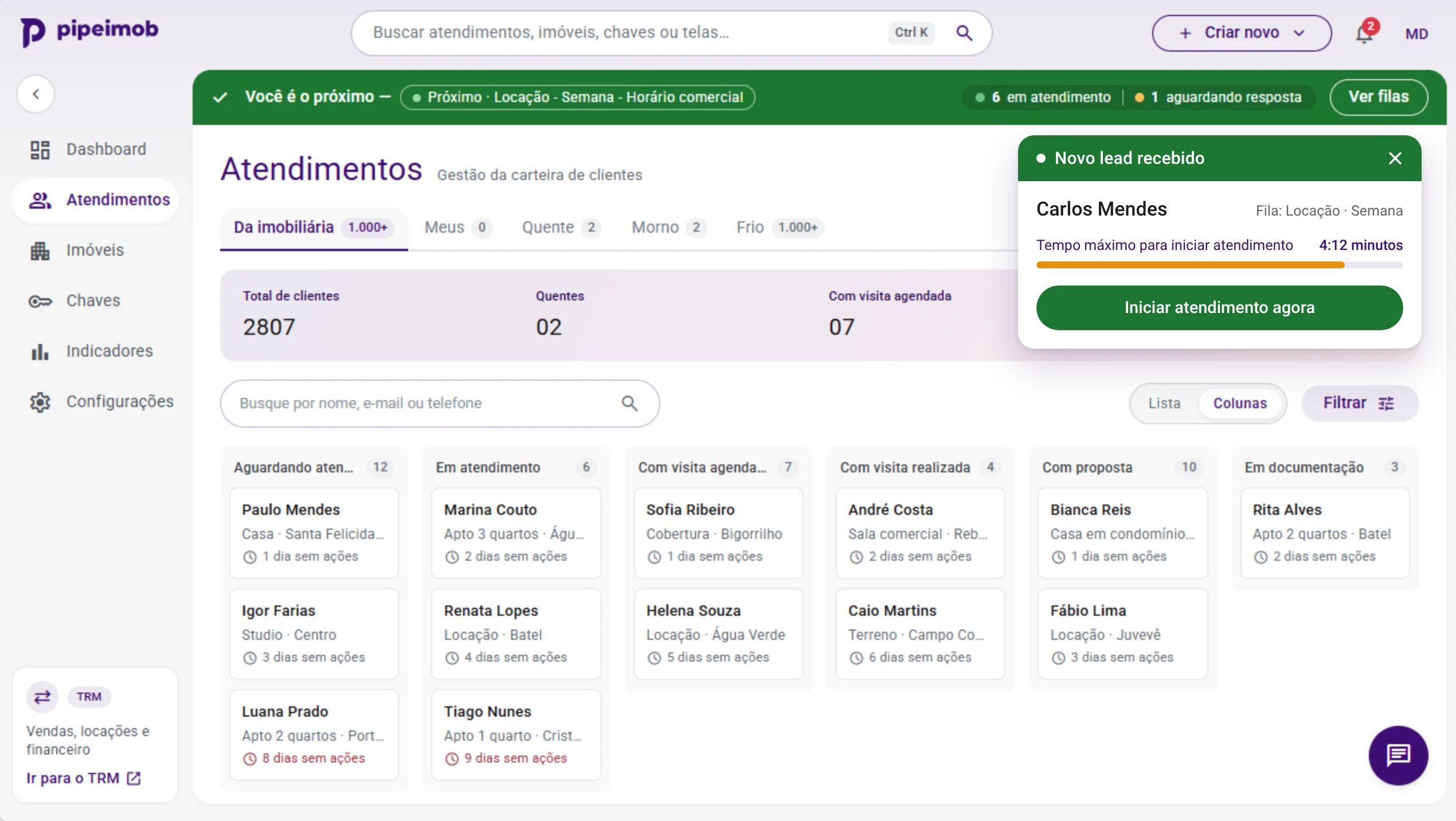
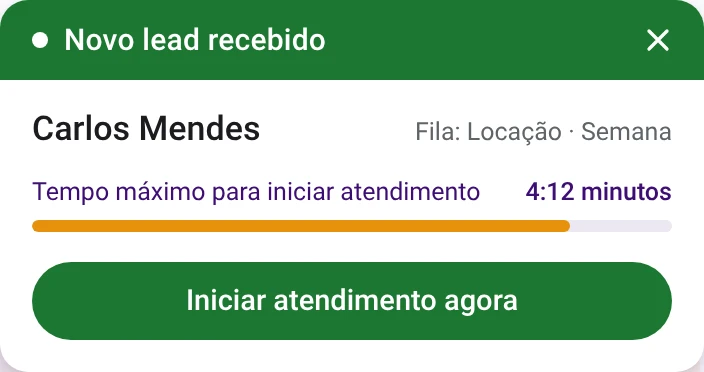
The CRM with a green bar on top saying the agent is next in the rentals queue, and an alert in the corner: new lead received, Carlos Mendes, rentals queue, 4 minutes 12 seconds left to start, and a button to start now.
A new lead reaching an agent. The bar shows the agent's place in line; the alert counts down the time to reply. Handoff design, shown on the new interface.
My role
Lead product designer. I guided a junior designer through the first prototype, then owned the design end to end.
Team
A product manager, engineering, and the support team that trained agencies.
Timeline
April to October 2026. Live since July 2026.
  • 15 minto reply before a lead moves to the next agent
  • 20+agencies in the first release
  • 100%of new agencies start with it

The problem

Leads arrived at night. The team didn't.

Agencies pay for every lead from portals and ads. The routing rules lived in an outside tool, so a manager could not see why a lead went to one agent, or that it was still waiting.

The product manager pulled a year of leads from one agency network. One in four never left the queue.

A year of leads by status Waiting for a first reply: 19.1%. Waiting to be routed: 6.2%. Together, 25.3% of all leads. In service 28.7%, client not responding 5.6%, dropped or lost 39.3%, closed 1.0%. Waiting for a first reply 19.1% Waiting to be routed 6.2% 25.3% in the queue, never contacted In service 28.7% Client not responding 5.6% Dropped or lost 39.3% Closed 1.0% One agency network, Aug 2025 to Aug 2026 A year of leads by status 25.3%in the queue, never contactedWaiting for a first reply19.1%Waiting to be routed6.2%In service28.7%Client not responding5.6%Dropped or lost39.3%Closed1.0%One agency network,Aug 2025 to Aug 2026
A quarter of all leads stopped before the first conversation. Redrawn from the product manager's analysis.

The timing explained it. More than half of the leads arrived after business hours or on a weekend, and those leads closed 3.4 times less often.

Leads by hour of the day Leads grow through the evening and peak at 9 pm, with 9% of the day's volume. Business hours, 9 am to 6 pm, take 44.3% of leads; the rest arrive when no one is on duty. business hours 9% at 9 pm 12 am6 am 10 am4 pm 8 pm11 pm 40% arrive after hours on weekdays, another 17% on weekends Leads by hour of the day business hours9% at 9 pm12 am9 am6 pm40% arrive after hours on weekdays,another 17% on weekends
The peak came when no one was there.

The night client isn't worse. They're just served worse.

The goal

From sharing leads fairly to never letting one stop

A fairer rotation would only share the same stuck queue. The goal became making every lead move, and the manager, who answers for the team, the person who needs to see it.

What changed for an agency, from the guide written for support teams at launch.
BeforeWith the lead roulette
Three fixed queues, by user levelAny number of queues, each with its own criteria
Leads went to whoever was on the list, even on vacationAgents check in, with a cap on open leads
No clock and no second chanceNo reply in time, the lead moves to the next agent
No match, and the lead stuck with one fixed agentIt waits in the right queue, or goes to a safety queue
No one could explain who got a lead"Why did I get this lead?" on every lead
Agents didn't know if they were in the rotationA bar on every screen, a queue panel and an alert with a timer

How it works

Follow a lead that arrives at 9 pm

A manager sets the rules of each queue once: who it serves, when it runs, who is in it and who manages it.

Setting up a queue. Five steps, with a summary that keeps every choice in view.

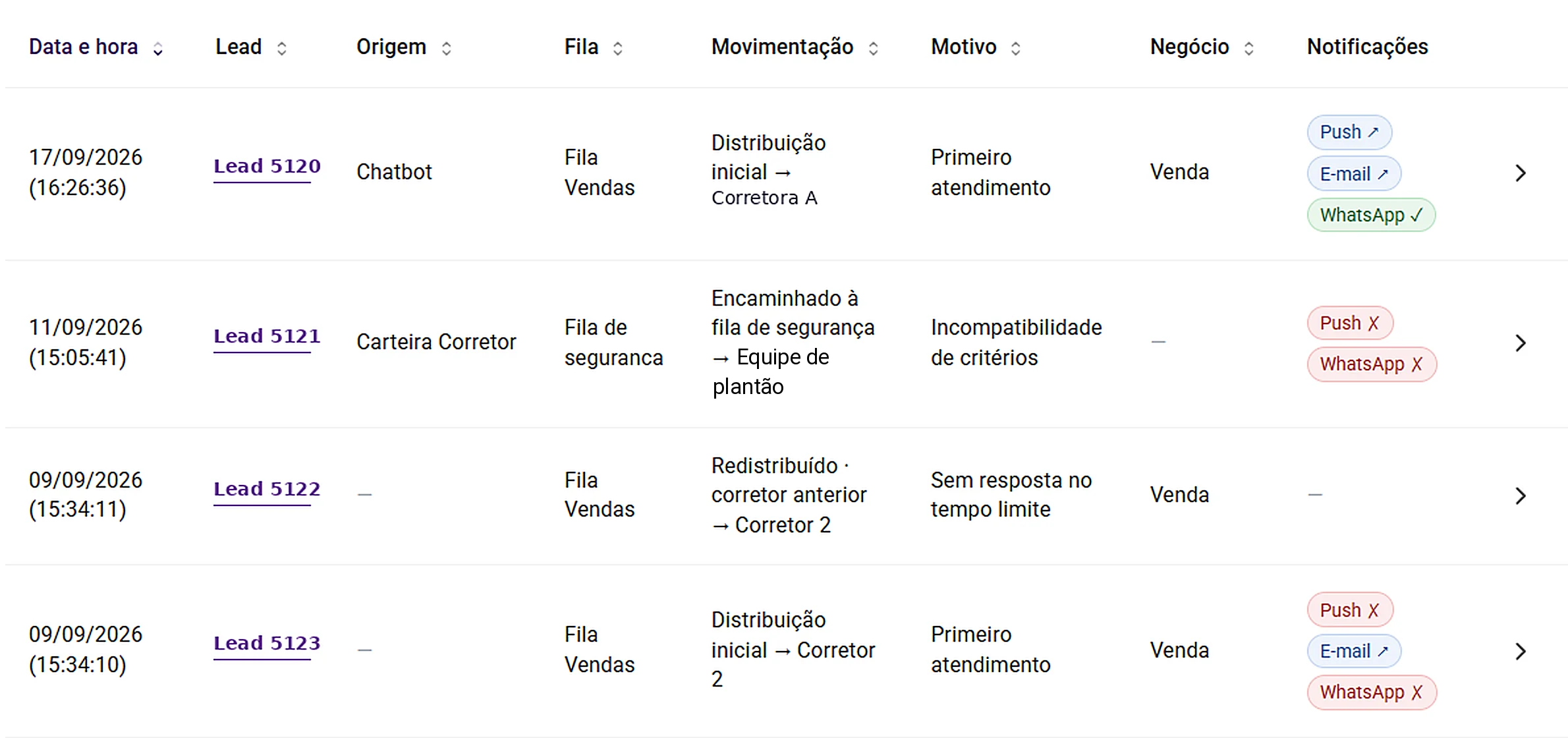
From then on, every lead goes through the same path, and each step has a screen.

What happens
The lead is checked against each queue in order and stops at the first match.
On screen
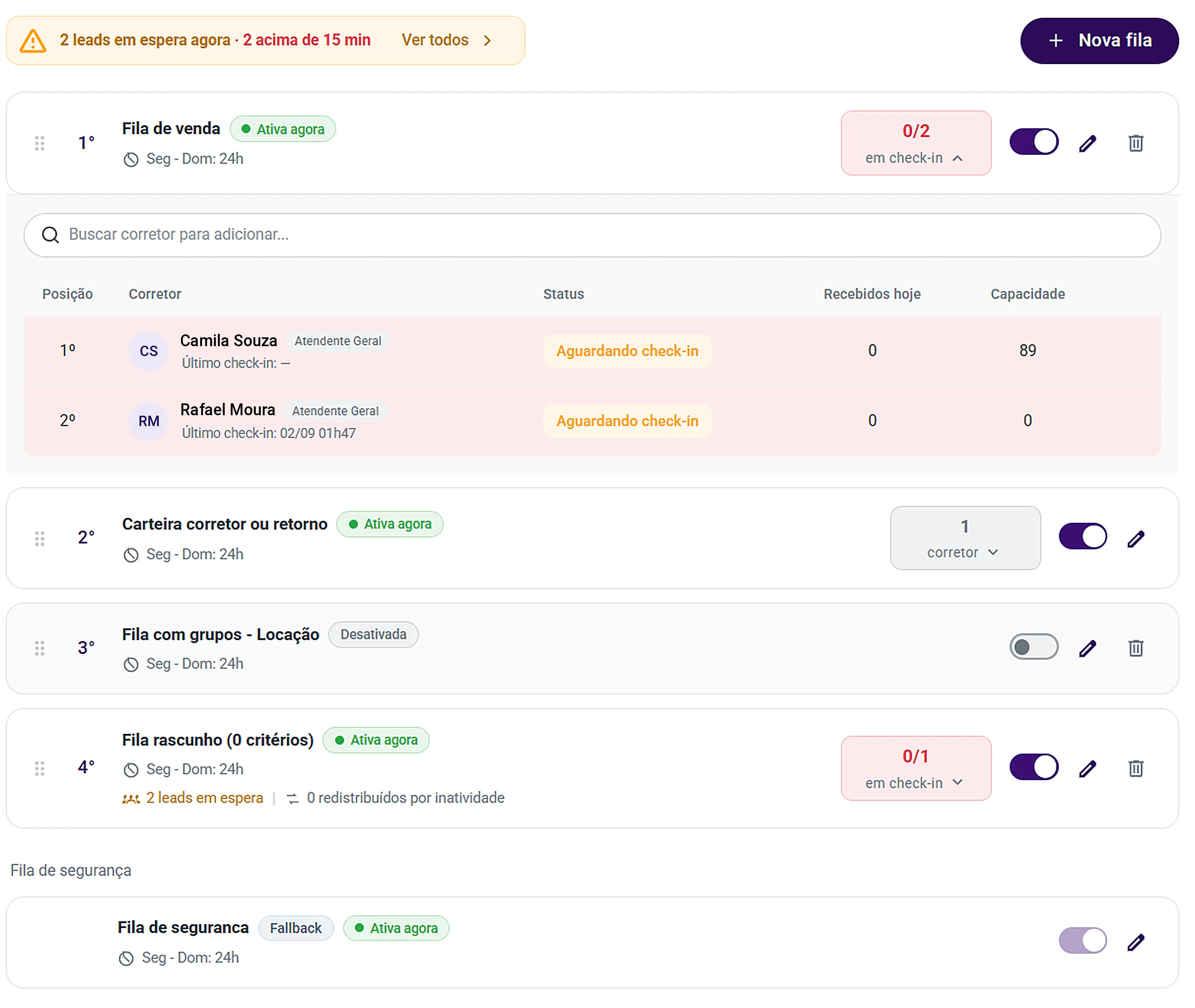
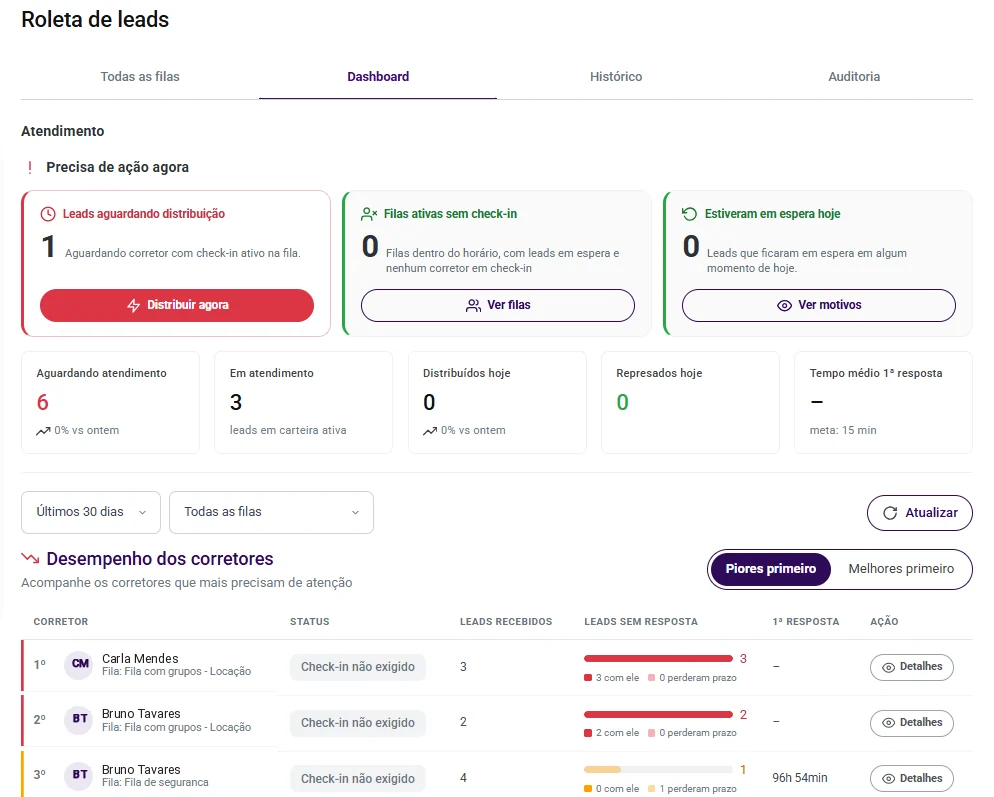
Each queue shows its hours, who is checked in and what is waiting.
Queue list: an amber notice of 2 leads on hold, 2 over 15 minutes, then queues in priority order with their status, hours, agents checked in and a safety queue at the end.

Decisions

Three decisions behind the screens

Decision 1

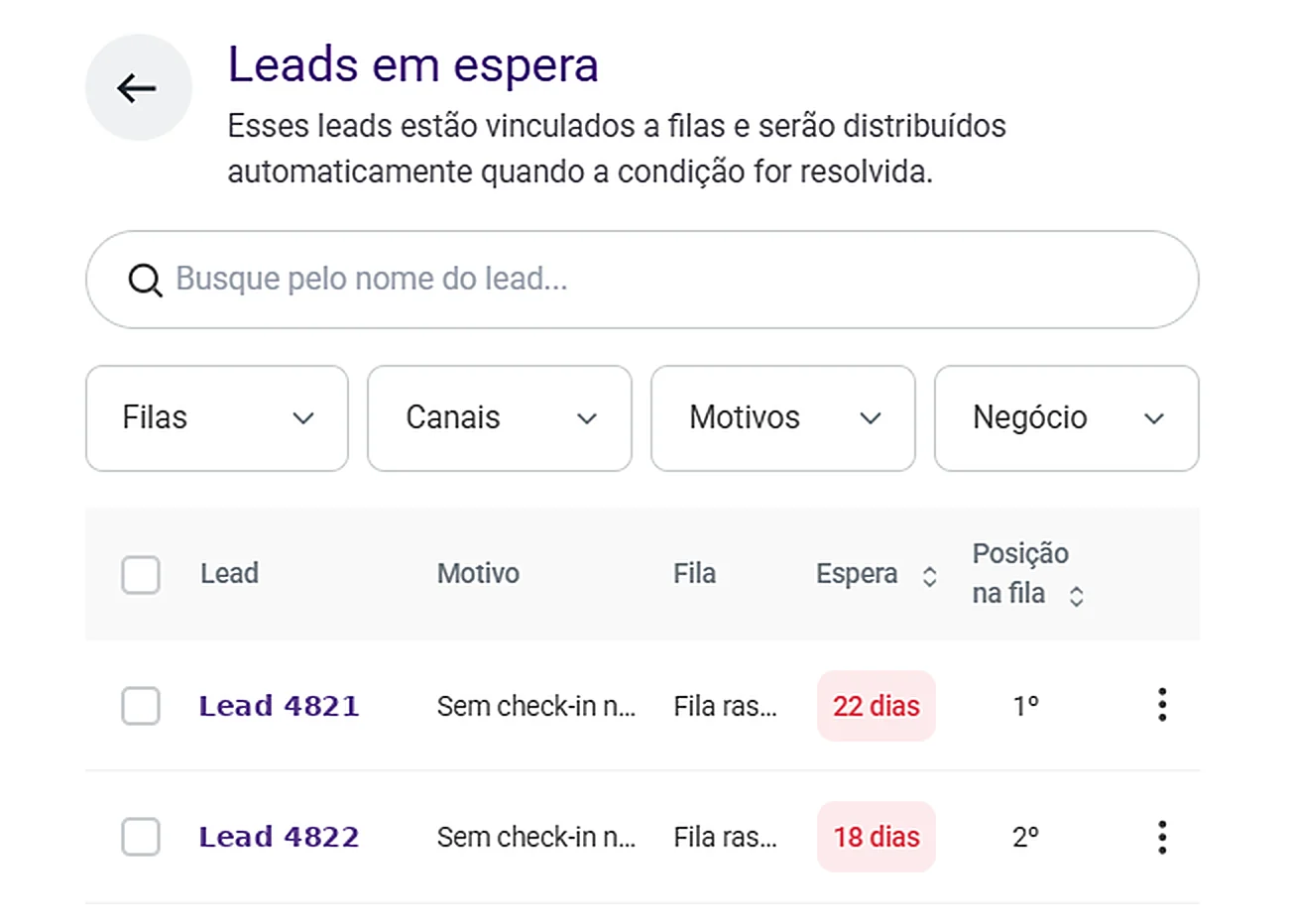
Waiting is a state, not an error

  • Rejected: Show a lead on hold as missing, or in red
  • Chosen: Name the state and give it a screen with the reason and the wait. Amber, and red only past 15 minutes

The costOne more screen and one more word to learn. Agencies later asked for a plainer name, and the screen stayed.
Decision 2

Fair, and seen to be fair

  • Rejected: An "accept all" button for the fastest agent
  • Chosen: Every lead says who got it and by which rule, in "Why did I get this lead?"

The costSlower for top agents, who could no longer grab leads in bulk.

Decision 3

Lock, don't hide

  • Rejected: Hide the queues a manager doesn't run
  • Chosen: Show them locked and read only, with the managers of each queue set in its settings

The costIt needed a permission model the CRM didn't have yet.

After launchJul to Oct 2026

Live, then shaped by real use

Real queues, shifts and teams showed what no scenario had. Agents checked in to several queues at once, and the top bar told four of five agents "You're next" at the same moment.

  1. Jul 2026LiveWith the first agency, and 13 fixes from that rollout
  2. Aug 2026On by defaultAbout 20 agencies in one release, and every new agency from then on
  3. Sep 2026An honest barRotation and direct queues split, so the bar stops promising a turn
  4. Oct 2026New interfaceThe bar and the queue panel redesigned for the new CRM
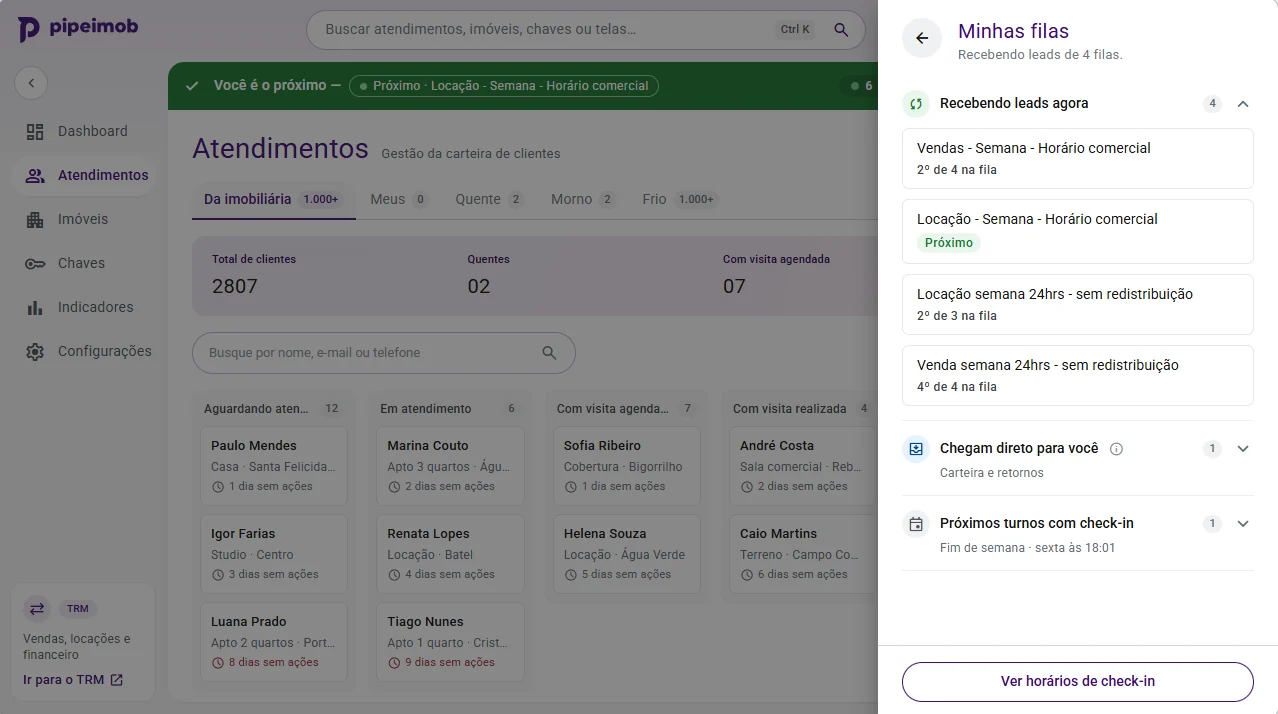
My queues panel on the new interface: receiving leads now from four queues with the agent's place in each, leads that come straight to the agent, and the next check-in shifts.
My queues, on the new interface. The agent's real place in each queue, with direct leads listed apart. Ready for development.

ResultsOct 2026

In use, and the base for what came next

  1. Released to agenciesFirst wave, August 2026Live20+
  2. New agenciesEvery account created since thenOn by default100%
  3. Outside routing toolRules now live in the CRMSwitched off0

Its permissions, with named actions, four roles and access denied by default, became the model for the rest of the CRM.

Learnings

What I would keep, and what I would change

Keep

Name a new state before users name it for you.

A lead on hold looked like a lost lead until it had a name, a reason and a timer.

Change

Put the metric in the brief, not after launch.

The data existed before the first screen. Three numbers I would have set as acceptance criteria:

  • Median time to first reply
  • Leads waiting over 24 hours
  • Close rate by time to first reply

More case studies

See all work
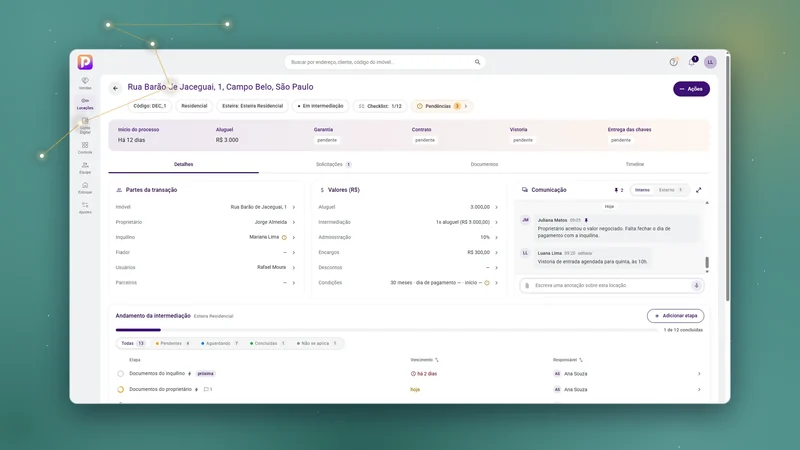
Rental detail screen of a real estate platform: the stage band, parties and values, and the team's notes.B2B proptech · Shipped

Rentals, from zero to the monthly rent

A rental product I designed from the first interviews, tested with agencies and owners, and grew into a full lease administration.

1 in 7active agencies pay for Rentals
Home page of the Decanter wine store, with a featured Malbec banner.E-commerce · Live

A wine list anyone can read

A premium wine store that read poorly on a phone. I rebuilt its text, navigation and buy flow for small screens.

+22%mobile conversion

Let’s talk.

Say hello

WhatsApp: +55 11 98847-0004 (opens in a new tab)

Open to freelance and senior product design roles · São Paulo, Brazil